
Highlights include 151m at 3.6 g/t PGM+Au (plus 0.16% Cu), including 43m at 8.3 g/t PGM+Au (plus 0.21% Cu), as well as 78m at 3.0 g/t PGM+Au, including 17m at 7.1 g/t PGM+Au
TORONTO, March 25, 2026 – Bravo Mining Corp. (TSX.V: BRVO, OTCQX: BRVMF), (“Bravo” or the “Company”) is pleased to report that it has received assay results from seven trenches in the North Sector at its 100% owned Luanga palladium + platinum + rhodium + gold + nickel deposit (“Luanga deposit” or “Luanga PGM+Au+Ni deposit”), located in the Carajás Mineral Province, Pará State, Brazil.
“Trenching has identified the presence of anomalous copper associated with elevated gold values in the North Sector of the Luanga Deposit, which is particularly encouraging, as it may point to later-stage Iron Oxide Copper Gold-style (“IOCG”) mineralization overprinting the PGM mineralization. This emerging copper-gold association supports our broader geological model and aligns with the rationale behind advancing our dedicated copper-gold exploration division, which is now working on an exploration program designed to further define and test Cu-Au targets in 2026,” said Luís Azevedo, Chairman and CEO of Bravo. “At the same time, trenching continues to demonstrate a broader lateral extent of oxide PGM+Au mineralization at surface, including zones with significantly higher grades and particularly elevated gold grades as compared to those previously observed. These consistent results suggest potential to increase the overall volume of oxide mineralization at Luanga. Importantly, the higher-grade zones observed in trenching align with, and in some cases exceed, grades intersected in drill holes at depth in this area.”
Highlights Include:
- Results from trenching at the most northerly part of Luanga’s North Sector have shown unusually high gold grades as compared to those previously observed at Luanga overall, including the remainder of the North Sector.
- Some trenches also show anomalous copper (“Cu”) associated with the gold, potentially indicative of later IOCG mineralization that is overprinting the PGM mineralization, that may be associated with other IOCG-style mineralization observed proximal to the North Sector, for example at the Babylon target.
- Infill trenching continues to confirm the presence of supergene enrichment in the saprolite zone (above the base of oxidation) in the North Sector.
| TRENCH-ID | From (m) |
To (m) |
Thickness (m) | Pd (g/t) |
Pt (g/t) |
Rh (g/t) |
Au (g/t) | PGM + Au (g/t) | Cu % | TYPE |
| TRC25LU055 | 0.00 | 151.20 | 151.20 | 1.18 | 1.96 | 0.18 | 0.29 | 3.61 | 0.16 | Ox |
| (including) | 19.80 | 62.80 | 43.00 | 2.71 | 4.53 | 0.44 | 0.66 | 8.33 | 0.21 | Ox |
| TRC25LU057 | 0.00 | 77.80 | 77.80 | 0.96 | 1.66 | 0.15 | 0.24 | 3.01 | NSR | Ox |
| (including) | 25.90 | 42.40 | 16.50 | 2.38 | 4.04 | 0.37 | 0.36 | 7.15 | NSR | Ox |
| TRC25LU060 | 0.00 | 87.90 | 87.90 | 1.00 | 1.87 | 0.19 | 0.04 | 3.10 | NSR | Ox |
| (including) | 35.70 | 48.80 | 13.10 | 4.11 | 7.27 | 0.78 | 0.09 | 12.25 | NSR | Ox |
| TRC25LU061 | 0.00 | 71.80 | 71.80 | 0.51 | 0.82 | 0.12 | 0.02 | 1.48 | NSR | Ox |
| (including) | 31.50 | 41.50 | 10.00 | 1.55 | 2.07 | 0.49 | 0.04 | 4.15 | NSR | Ox |
Notes: All ‘From’, ‘To’ depths, and ‘Thicknesses’ are along the topographic surface. “NSR” = No Significant result.
Type: Ox = Oxide. Recovery methods and results will differ based on the type of mineralization.
Luanga Trenching Program
Trenching across the strike of the Luanga PGM+Au+Ni deposit is aimed at improving the interpretation of near-surface mineralization and reducing the spacing between assay data points, with the objective of supporting mineral resource classification to the Indicated category. The program has continued to be successful in meeting Bravo’s objectives.
Results from trenching at the most northerly part of Luanga’s North Sector have shown unusually high gold grades as compared to those previously observed at Luanga, including elsewhere in the North Sector. A series of six infill trenches (TRC25LU055 and TRC25LU057 to TRC25LU061 inclusive; Figures 1 and 2) were completed to further investigate the higher gold grades, while trench TRC25LU056 at the southern end of the North Sector aimed to further test for the presence of higher gold grades in that area.
As previously observed in nearby trench TRC23LU021, which returned 79m at 3.65g/t PGM+Au with Au at 0.13 g/t Au, and including 22m at 9.4g/t PGM+Au with Au at 0.43 g/t Au (see news release dated September 26, 2023), trenches TRC25LU055 and 057 also returned gold grades that are multiple times higher than those observed elsewhere at Luanga, and comparable to or exceeding the higher gold grades initially encountered in TRC023LU021. Trench TRC25LU055 also returned highly anomalous associated copper values.
Anomalous copper associated with elevated gold values is potentially indicative of later IOCG mineralization which is believed to be associated with the potential IOCG-style mineralization intersected at the Babylon target.
Trench TRC25LU055 (151m at 0.29 g/t Au, 0.16% Cu, including 43m at 0.66 g/t Au and 0.21% Cu), returned the best Cu-Au results. Trench TRC025LU056 (Figure 2), located at the southern extent of the North Sector, also showed indications of elevated gold grades, however anomalous associated copper was also returned (including 30m at 0.15 g/t Au, 0.16% Cu). This trench is located to the south of the Babylon target mineralization and the buried granitic intrusion referenced above.
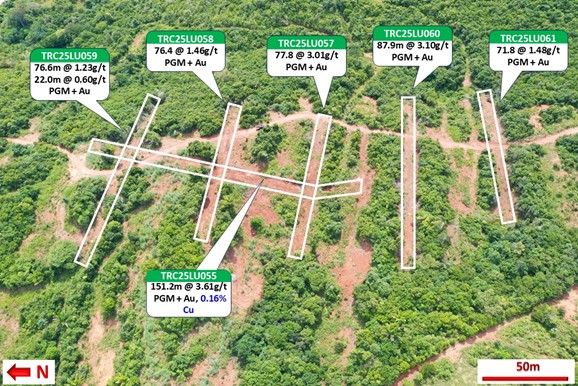
Figure 1: Trenching at the northern end of the North Sector.
Figure 1 shows the location of trenches at the northern extent of the North Sector, while Figure 2 shows the location of all trenches reported in this news release. Infill trenching continues to confirm the presence of supergene enrichment in the saprolite zone (above the base of oxidation) in the North Sector. The presence of higher gold grade zones within this sector may have favourable economic implications, given the anticipated simpler recovery of gold versus PGMs in oxide material.
The same sampling and assay laboratory procedures, as well as QAQC protocols applied to drill core sampling, are applied to trench samples.
Luanga Drilling & Trenching Status
A total of 387 drill holes have been completed by Bravo to date, totaling 80,977 metres, including 8 metallurgical holes (not subject to routine assaying). Results have been reported for 347 Bravo drill holes to date. Assay results for 32 drill holes are currently outstanding (excluding the metallurgical holes). A total of 58 trenches have been completed to date (10,901 metres), with results for 6 trenches currently pending.
Complete Table of Recent Intercepts - Trenching
| TRENCH-ID | From (m) |
To (m) |
Thickness (m) |
Pd (g/t) |
Pt (g/t) |
Rh (g/t) |
Au (g/t) |
PGM + Au (g/t) |
Cu % | TYPE |
| TRC25LU055 | 0.00 | 151.20 | 151.20 | 1.18 | 1.96 | 0.18 | 0.29 | 3.61 | 0.16 | Ox |
| (including) | 0.00 | 4.00 | 4.00 | 5.46 | 1.39 | 1.29 | 0.05 | 8.19 | NSR | Ox |
| (including) | 19.80 | 62.80 | 43.00 | 2.71 | 4.53 | 0.44 | 0.66 | 8.33 | 0.21 | Ox |
| TRC25LU056 | 0.00 | 203.25 | 203.25 | 0.19 | 0.39 | 0.02 | 0.06 | 0.66 | 0.09 | Ox |
| (including) | 51.60 | 56.60 | 5.00 | 0.33 | 0.63 | 0.04 | 0.01 | 1.01 | 0.03 | Ox |
| (including) | 69.95 | 72.80 | 2.85 | 0.55 | 0.91 | 0.02 | 0.04 | 1.52 | 0.11 | Ox |
| (including) | 108.80 | 139.00 | 30.20 | 0.33 | 0.70 | 0.02 | 0.15 | 1.20 | 0.16 | Ox |
| (including) | 168.40 | 193.25 | 24.85 | 0.17 | 0.45 | 0.03 | 0.11 | 0.77 | 0.20 | Ox |
| TRC25LU057 | 0.00 | 77.80 | 77.80 | 0.96 | 1.66 | 0.15 | 0.24 | 3.01 | NSR | Ox |
| (including) | 25.90 | 42.40 | 16.50 | 2.38 | 4.04 | 0.37 | 0.36 | 7.15 | NSR | Ox |
| TRC25LU058 | 0.00 | 76.40 | 76.40 | 0.39 | 0.88 | 0.05 | 0.14 | 1.46 | NSR | Ox |
| (including) | 7.00 | 12.60 | 5.60 | 1.75 | 2.99 | 0.22 | 0.04 | 5.00 | NSR | Ox |
| TRC25LU059 | 0.00 | 76.60 | 76.60 | 0.28 | 0.84 | 0.02 | 0.09 | 1.23 | NSR | Ox |
| 79.60 | 101.60 | 22.00 | 0.15 | 0.33 | 0.02 | 0.10 | 0.60 | NSR | Ox | |
| TRC25LU060 | 0.00 | 87.90 | 87.90 | 1.00 | 1.87 | 0.19 | 0.04 | 3.10 | NSR | Ox |
| (including) | 35.70 | 48.80 | 13.10 | 4.11 | 7.27 | 0.78 | 0.09 | 12.25 | NSR | Ox |
| TRC25LU061 | 0.00 | 71.80 | 71.80 | 0.51 | 0.82 | 0.12 | 0.02 | 1.48 | NSR | Ox |
| (including) | 31.50 | 41.50 | 10.00 | 1.55 | 2.07 | 0.49 | 0.04 | 4.15 | NSR | Ox |
Notes: All ‘From’, ‘To’ depths, and ‘Thicknesses’ are along the topographic surface. “NSR” = No Significant result.
Type: Ox = Oxide. Recovery methods and results will differ based on the type of mineralization.
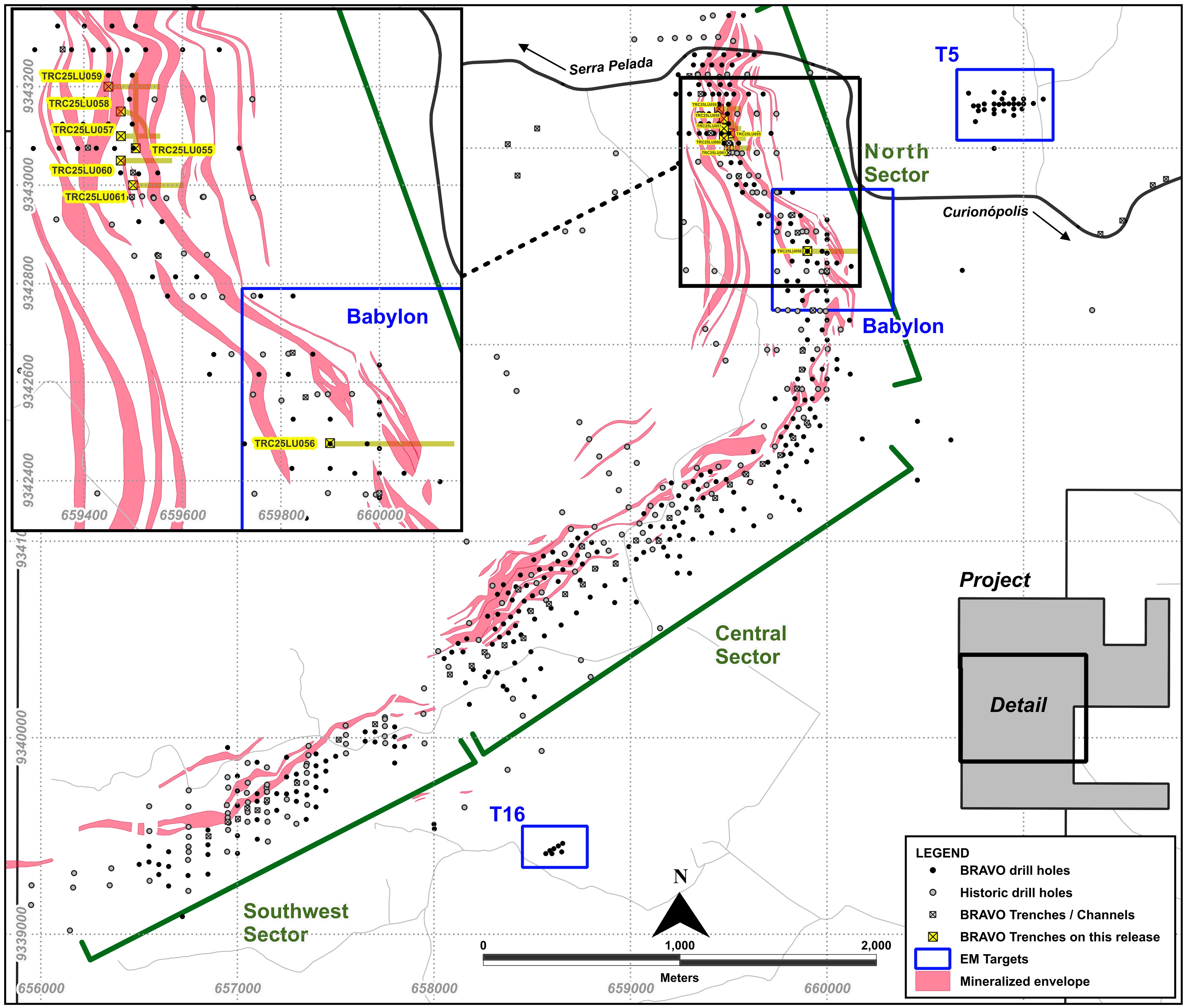
Figure 2: Location of Bravo Trenches Reported in this News Release
About Bravo Mining Corp.
Bravo is a Canadian and Brazil-based mineral exploration and development company focused on advancing its PGM and copper-gold Luanga Project in the Carajás Mineral Province, Pará State, Brazil. Bravo is one of the most active explorers in Carajás.
The team, comprising of local and international geologists, has a proven track record of PGM, nickel, and copper discoveries in the region. They have successfully taken a past IOCG greenfield project from discovery to development and production in the Carajás.
The Luanga Project is situated on mature freehold farming land and benefits from being located close to operating mines and a mining-experienced workforce, with excellent access and proximity to existing infrastructure, including road, rail, and hydroelectric grid power. Bravo’s current Environmental, Social and Governance activities include planting more than 54,000 high-value trees in and around the project area and hiring and contracting locally.
Technical Disclosure
Technical information in this news release has been reviewed and approved by Simon Mottram, F.AusIMM (Fellow Australian Institute of Mining and Metallurgy), President of Bravo Mining Corp. who serves as the Company’s “qualified person” as defined in National Instrument 43-101 Standards of Disclosure for Mineral Projects (“NI 43-101”). Mr. Mottram has verified the technical data and opinions contained in this news release.
For further information about Bravo, please visit www.bravomining.com or contact:
Luis Azevedo, Chairman and CEO or
Alex Penha, EVP Corporate Development
T: +1-416-509-0583
info@bravomining.com
Neither TSX Venture Exchange nor its Regulation Services Provider (as that term is defined in policies of the TSX Venture Exchange) accepts responsibility for the adequacy or accuracy of this release.
Forward Looking Statements
This news release contains forward-looking information which is not comprised of historical facts. Forward-looking information is characterized by words such as “potential”, “supports”, “aligns”, “designed to”, “anticipated”, “aimed”, “objective”, “favourable”, “encouraging”, “believed to”, “suggests”, “target”, “interpretation”, “indicative”, and similar expressions, variants of these words and other similar words, phrases, or statements that certain events or conditions “could”, “may”, “should” or “will” occur. This news release contains forward-looking information pertaining to the Company’s trenching program; the interpretation of the results of trench data, including that zones of higher gold grades may exist in the saprolite, their lateral extent and continuity; the assay values of pending and future trench results; the impact on mineral resource estimates thereafter; the potential to classify mineral resources as indicated; the potential future economics of the saprolite material, including the recoverability of Au and PGMs therein; and the Company’s plans in respect thereof. Forward-looking information involves risks, uncertainties and other factors that could cause actual events, results, and opportunities to differ materially from those expressed or implied by such forward-looking information. Factors that could cause actual results to differ materially from such forward-looking information include, but are not limited to, unexpected results from exploration programs, changes in the state of equity and debt markets, fluctuations in commodity prices, delays in obtaining required regulatory or governmental approvals, environmental risks, limitations on insurance coverage; and other risks and uncertainties involved in the mineral exploration and development industry. Forward-looking information in this news release is based on the opinions and assumptions of management considered reasonable as of the date hereof, including, but not limited to results from trenching reasonably reflect consistent zones of oxide mineralization and that future results from additional trenching will continue to see similar broad distribution of oxides with higher grades that the current MRE; that activities will not be adversely disrupted or impeded by regulatory, political, community, economic, environmental and/or healthy and safety risks; that the Luanga Project will not be materially affected by potential supply chain disruptions; and general business and economic conditions will not change in a materially adverse manner. Although the Company believes that the assumptions and factors used in preparing the forward-looking information in this news release are reasonable, undue reliance should not be placed on such information. The Company disclaims any intention or obligation to update or revise any forward-looking information, other than as required by applicable securities laws.
Schedule 1: Trench Location Details
| HOLE-ID | Company | East (m) | North (m) | RL (m) | Datum | Length (m) | Azimuth | Dip | Sector |
| TRC25LU055 | Bravo | 659505.42 | 9343074.95 | 268.544 | SIRGAS2000_UTM_22S | 151.20 | 360.00 | 0.00 | North |
| TRC25LU056 | Bravo | 659900.00 | 9342475.00 | 274.553 | SIRGAS2000_UTM_22S | 250.50 | 90.00 | 0.00 | North |
| TRC25LU057 | Bravo | 659475.31 | 9343099.58 | 257.928 | SIRGAS2000_UTM_22S | 77.80 | 90.00 | 0.00 | North |
| TRC25LU058 | Bravo | 659474.98 | 9343149.66 | 267.815 | SIRGAS2000_UTM_22S | 76.40 | 90.00 | 0.00 | North |
| TRC25LU059 | Bravo | 659450.01 | 9343200.00 | 263.980 | SIRGAS2000_UTM_22S | 101.60 | 90.00 | 0.00 | North |
| TRC25LU060 | Bravo | 659474.95 | 9343049.84 | 269.833 | SIRGAS2000_UTM_22S | 100.70 | 90.00 | 0.00 | North |
| TRC25LU061 | Bravo | 659500.00 | 9342999.68 | 270.793 | SIRGAS2000_UTM_22S | 99.80 | 90.00 | 0.00 | North |
Schedule 2: Assay Methodologies and QAQC
Samples follow a chain of custody between collection, processing, and delivery to the SGS laboratory in Parauapebas, state of Pará, Brazil. The drill core is delivered to the core shack at Bravo’s Luanga site facilities and processed by geologists who insert certified reference materials, blanks, and duplicates into the sampling sequence. Drill core is half cut and placed in secured polyurethane bags, then in security-sealed sacks before being delivered directly from the Luanga site facilities to the Parauapebas SGS laboratory by Bravo staff. Additional information about the methodology can be found on the SGS Geosol website (SGS) in their analytical guides. Information regarding preparation and analysis of historic drill core is also presented in the table below, where the information is known.
Quality Assurance and Quality Control (“QAQC”) is maintained internally at the lab through rigorous use of internal certified reference materials, blanks, and duplicates. An additional QAQC program is administered by Bravo using certified reference materials, duplicate samples and blank samples that are blindly inserted into the sample batch. If a QAQC sample returns an unacceptable value an investigation into the results is triggered and when deemed necessary, the samples that were tested in the batch with the failed QAQC sample are re-tested.
| Bravo SGS Geosol | |||
| Preparation | Method | Method | Method |
| For All Elements | Pt, Pd, Au | Rh | Trace Elements |
| PRPCLI (85% at 200#) | FAI515 | FAI30V | ICP40B |